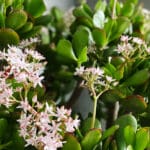
They are everyone’s favourite. Colourful, green, and easy to care for, succulents have a huge fan following. They can store water in their leaves, stems, or roots, and this is why they can survive in the absence of water. The word succulent is derived from the Latin “sucus,” meaning “juice or sap,” which aptly describes these fascinating plants’ meaty leaves. In this article, we will acquaint you with various types of succulents to give you an overview of the juicy plants.
Not all succulents are your average aloe or jade. This guide covers all types of succulents, including their advantages and disadvantages. Here are your succulent options, A to Z.
Table of contents
- A is for Aeonium:
- B is for Burro’s Tail (Sedum morganianum):
- C is for Cactus:
- D is for Donkey’s Tail:
- E is for Echeveria
- F is for Flapjack Plant:
- Graptopetalum – The “G” plant:
- H is for Haworthia:
- I for Ice Plant:
- Jade Plant (J):
- Kalanchoe (K):
- L is for Lithops:
- M is for Moon Cactus:
- N is for Nopal:
- O is for Ocotillo:
- P is for Pincushion Cactus:
- Q is for Queen Victoria Agave:
- R is for Rosette Succulents:
- S for String of Pearls:
- T is for Tiger’s Jaw:
- U is for “Unforgettable Agaves”:
- V is for Venus’s Flytrap:
- W is for Whale’s Tongue Agave:
- Xeriscaping (X):
- Y is for Year-Round Succulent Beauties:
- Z is for Zebra Plant:
- In summary
Estimated reading time: 17 minutes
Disclosure: This article was partially written with the assistance of AI and humanly edited.
A is for Aeonium:
Aeoniums have lovely rosettes and a fascinating growth and flowering habit. Many are perennial, some producing trailing stems and flowering in summer without dying after flowering. However, they can provide your garden with years of architectural interest before the big day arrives.
Benefits of Aeoniums
- Rosettes of spectacular aspect.
- Variation of leaf color and shape.
The downside of Aeoniums
- It is somewhat temperature-sensitive and prone to overwatering.
- A few types must be pruned in such a manner to preserve.
B is for Burro’s Tail (Sedum morganianum):
A weird and wonderful succulent with stems resembling a donkey’s tail, thus its common name. The Burro’s Tail (Sedum Morganianum) is exactly that: a succulent with trailing stems smothered in fat, green, jellybean-shaped leaves. Great for hanging baskets or shelves where stems can trail.
Advantages of Burro’s Tail
- It is also a good choice for hanging baskets or wall planters because of its trailing habit.
- It is easily rooted from cuttings and thus a good plant for beginners.
Disadvantages of Burro’s Tail
- They are prone to shedding leaves when disturbed or brushed against, creating a mess.
- They require a lot of bright, direct light, which can be hard to come by in many spaces.

C is for Cactus:
Cacti are probably the first succulents you thought of when you imagined the term. Known for their spines and their endurance in the driest and hottest of deserts, cacti are rugged.
Advantages of cacti
- Cacti can also be very helpful. They provide valuable food, shelter, and habitat for various animals, including birds, insects, and reptiles.
- There are sizes and shapes of cacti to suit everyone!
- They require little water or maintenance, making them ideal for busy individuals.
Disadvantages of cacti:
- The problem is that those spines make them difficult to manipulate or move.
- They can get quite large, so they may not be the best option if you have space constraints.
Read also: Cactus: The Ultimate Guide to Succulent Gardening with Cacti

D is for Donkey’s Tail:
The Sedum Morganianum, or ‘Donkey’s Tail’, (and yes, it’s also called Burro’s Tail) gets its name from its cascading stems with chubby leaves. A succulent collector’s favourite; it’s capable of storing a lot of water, which makes the leaves incredibly thick and meaty.
Advantages of Donkey’s Tail
- Plush and extravagant, they add a whimsical touch to a room.
- This is a tough, easy-to-grow plant. It is pretty low maintenance.
Disadvantages of Donkey’s Tail
- It is generally pest-resistant, but overwatering can cause root rot.
- This succulent species can flower indoors with proper care, but it may take some time and is not guaranteed.
- The stem is quite weak and likely to break. Therefore, you must handle it with care.
- Donkey’s Tail does not tolerate extreme cold and frost. If you are in a cold climate, then this is not for you.
- Will not endure excessive watering nor frost.
- They are prone to mealybugs and root rot if not properly cared for.
Read also: Donkey’s Tail: A Succulent Gardening Superstar
Resource: plants.ces.ncsu.edu

E is for Echeveria
Grown for their rosettes, which form neat symmetrical clumps of pastel coloured leaves, Echeverias are in demand for wedding bouquets and as a pot or border addition.
Advantages of Echeveria
- Not only are they drought-tolerant, but also light frost-tolerant.
- With all the different colors and combinations of hybrids, the arrangement possibilities are endless!
Disadvantages of Echeveria
- One is that leaves may get scorched if the plant is grown too close to a window.
- Pests such as mealybugs are also attracted to Echeveria.
- Overwatering is another factor that may cause root rot. Echeveria sap may cause mild irritation, so avoid ingesting it.
- They can be slightly more sensitive to excess water and require well-drained soil.
- Due to their delicate form, they may need a little protection from the wind, which will cause the leaves to dry and become unsightly.
Read also: Echeverias: Always a Popular & Versatile Succulent Choice
F is for Flapjack Plant:
The Flapjack Plant (Kalanchoe thyrsiflora) looks like what it sounds like, a succulent with quirky pancake-like leaves!
Advantages of Flapjack Plants
- Their distinct leaf structure and coloration set them apart from other flora.
- As with many succulents, they are easy to propagate and maintain.
Disadvantages of the Flapjack Plant
- It is toxic to animals, so it may not be the most suitable plant for pet owners with pets that tend to eat houseplants.
- They can get quite large, so you may have to transplant them into a larger container.
Graptopetalum – The “G” plant:
Graptopetalum has gorgeous rosettes that are thick at the middle and thin at the ends. They resemble roses. These plants prefer bright light conditions to give out their beautiful colors, lavender, pink, and blue.
Advantages of Graptopetalum
- Graptopetalum is an effective ground cover or greenwall plant.
- In most cases, it requires no additional care and is easy to maintain.
- It is relatively inexpensive.
- They are also somewhat hardy and tolerate mistakes, which is helpful for a beginner plant.
Disadvantages of Graptopetalum
- It’s not really a flowering plant; the flowers aren’t that impressive.
- It can get top-heavy and fall over in the wind
Resource: growup.green
H is for Haworthia:
Interestingly, although Haworthias are often confused with aloes because of their prickly foliage, their clear ‘windows’ are their defining characteristic. They allow the sunlight to penetrate to the gel-filled hearts of the plants. It is a characteristic shared with some other succulents, like Fenestraria, and a firm favourite amongst keepers.
Advantages of Haworthia
- Attractive foliage and the ability to be grown indoors.
- They are small plants that want low light, making them good houseplants.
Disadvantages of Haworthia
- They are small.
- It is very slow-growing.
Resource: plants.ces.ncsu.edu

I for Ice Plant:
Next is the Ice Plant, also known as Delosperma. You can see the little drops on the plant that give it an icy appearance. It’s a low-growing ground cover perfect for hanging baskets, where it cascades, or for rock gardens, where it spreads. There is nothing quite like a luscious Ice Plant to give your garden some sparkle.
Advantages of Ice Plant
The perfect garden and collector’s plant, it truly is a show-stopper.
It is used for erosion control due to its mat-like structure.
Disadvantages of Ice Plant
- This plant grows by spreading, so it may require a bit more space than other succulents on this list.
- Frost tender; may need protection or moved under cover in winter in cooler areas.
Read also: Succulent Ice Plants: A Gardener’s Sparkling Gem
Jade Plant (J):
Crassula Ovata, or Jade Plant, is one of the most popular, well-known, and loved succulents! This is known to bring good luck and prosperity in many cultures and is often used in Feng Shui because it symbolizes wealth and new beginnings.
Advantages of the Jade Plant
- This plant is highly resilient and can withstand significant abuse.
- Though some people say the plant has given them good fortune, we can’t scientifically corroborate that!
Advantages of the Jade Plant
- Jade Plants are easy to care for but can suffer from overwatering, which can lead to root rot and leaf drop.
- That said, it’s not as fast-growing, so it’s not ideal if you want something that will change significantly.
- This is another cold-sensitive succulent, which means it will require a bit more attention during the winter months.
Resource: scottsmiraclegro.com
Kalanchoe (K):
There are wide varieties of Kalanchoe, but they tend to have fleshy leaves and loads of small flowers. Kalanchoe is often a disposable plant once it has flowered, but it can be persuaded to bloom again with the right conditions.
Advantages of Kalanchoe
- They produce a ton of showy flowers that draw the eye wherever they’re placed.
- It is very easy to encourage a second bloom, provided you have proper lighting control.
Disadvantages of Kalanchoe
- Kalanchoe Plants cannot thrive in extreme heat or cold.
- Oxygen produced by Kalanchoe at night is lower than that of other plants, so it is not a great plant for indoors.
- After they’re finished blooming, they require a period of darkness to force the plant to bloom once more. This might be a little problematic for some.
- They are prone to root rot when overwatered, so I would be strict about the watering schedule.
L is for Lithops:
If you want succulents to go unnoticed, there is no better camouflage than the Lithops (Pebbles or Living Stones). They look like tiny stones or pebbles, and each Lithops grows only one (or two) pair of fleshy leaves, which store water.
Advantages of Lithops
- They are very low maintenance and prefer infrequent waterings and full to partial sunlight
- They have a distinctive look and would add visual interest to a rock garden.
- Their appearance is one of the notable aspects and can often make them seem inanimate.
- Their drought tolerance makes them ideal for low-maintenance gardens, too.
Disadvantages of Lithops
- They are poisonous.
- They are very costly.
- They are vulnerable to pests.
- They can be quite fussy about watering: They prefer to dry almost completely between waterings.
- They are slightly harder to grow due to their specific requirements.
M is for Moon Cactus:
The Moon Cactus is not a naturally occurring species but a colour mutation known for its vibrant, lively colours and ease of care. It has the scientific name of Gymnocalycium Mihanovichii and is grafted onto the root of another cactus.
Advantages of Moon Cactus
- The color on top is due to a lack of chlorophyll, which gives them their beautiful, striking colors.
- They’re essentially cacti with training wheels, making them a great option for beginners since they are hard to kill.
Disadvantages of Moon Cactus
- Moon Cactus grows slowly. But with plenty of light, water, and fertilizer, it will be with you for many years.
- They cannot be self-sufficient and, therefore, are more needy than most other succulents.
- It needs a bit more care than other cacti as it doesn’t contain chlorophyll.
- They do need some special care and, for that reason, aren’t suitable for all gardeners.
N is for Nopal:
Not only is the Nopal (prickly pear cactus) a pretty and photogenic plant, but it is also a vital component of Mexican cuisine. The tuna (fruit of the cactus) is a sweet snack, and the leaves themselves can be cooked and are full of nutrients.
Advantages of Nopal
- This is a dual-purpose plant, being both edible and ornamental, and serving two purposes in the garden.
- It also has cultural significance, adding another depth to its presence in a collection and/or environment.
Disadvantages of Nopal
- This has both sharp spines and glochids, so you need to take care and wear protective gloves when handling it.
- It does get rather big, so make sure you have space in your garden or pot for it.
O is for Ocotillo:
The Ocotillo is a uniquely gnarled and thorny plant. A western classic, it grows small leaves and colorful flowers in the spring and with the summer rains.
Advantages of Ocotillo
- An architectural element that offers a distinctive experience of the desert landscape.
- It makes a great focal point in a garden when it’s in bloom.
Disadvantages of Ocotillo
- This is a mostly deciduous plant, and it isn’t all that attractive when it’s dormant.
- It can grow large and form numerous spines, which may make it unsuitable for some locations or gardens.
P is for Pincushion Cactus:
The Pincushion Cactus, or Mammillaria, is named as such due to the dense spines which give it the appearance of a cactus pincushion. With proper care, it also produces small fuzzy flowers to balance out the thorns.
Advantages of Pincushion Cactus
- They are often used as ornamental plants and are valued for their spiny exteriors and beautiful flowers.
- Because they are low-maintenance, pincushion cacti can be used as houseplants.
- The flowers and stems of some cacti are sometimes used as a food source.
- In the case of some cacti, like Opuntia, the fruits are edible.
- This is a robust, low-maintenance plant.
- The flowers are a nice bonus, and it is lovely to see them in bloom.
Disadvantages of a Pincushion Cactus
- Not a very people-friendly plant, what with all those spines.
- The plants can be slow-growing, which may not suit everyone’s tastes.
Q is for Queen Victoria Agave:
The Agave Victoriae-Reginae is a favorite of many, also known as the Queen Victoria Agave. It has stunning white markings on its dark green leaves and is slow-growing, but the visual effect makes it well worth the wait.
Advantages of Queen Victoria Agave
- A dramatic showpiece wherever you place it.
- Like other succulents, this type can be affected by pests such as mealybugs and diseases such as root rot when overwatered.
Disadvantages of Queen Victoria Agave
- Like most agave, Queen Victoria Agave is monocarpic. It will flower and then die, but that could be many years from now.
- Queen Victoria Agave is compact, growing to around 20 inches, making it suitable for small spaces.
R is for Rosette Succulents:
This is a broader term that encompasses many species. Rosette Succulents are characterized by leaves that are formed in a dense circular arrangement and radiate out from the center.
Advantages of Rosette Succulents
- They are commonly used in arrangements and on their own in pots as a structural element.
- They offer a good selection of the usual items and a few options for those with a different palate.
- They are used for various decorative purposes due to their unique shapes.
Disadvantages of Rosette Succulents
- Many rosette succulents are monocarpic. This means they will flower once and then die.
- Some take time to grow or require specific conditions to reach their full potential.

S for String of Pearls:
The String of Pearls (Senecio Rowleyanus) is literally a string of tiny green pearls. This is the succulent to use for hanging baskets or cascading over the side of a pot, creating a waterfall of green.
Advantages of String of Pearls
- The distinct appearance of this figurine sets it apart from the rest of the collection.
- It is charming, petite, elegantly pretty, and hard to miss.
Disadvantages of Spring of Pearls
- Some people may find String of Pearls plants too small and dainty.
- The “pearls” (leaves) can be easily knocked off the plant if not handled gently.
- String of pearls can be difficult to propagate because the leaves are so easily knocked off the plant.
- Some people may not find a string of pearls attractive.
Read also: String of Pearls: A Stunning & Distinctive Addition to Any Garden
T is for Tiger’s Jaw:
Tiger’s Jaw (Faucaria Tigrina). As stated on the box. Triangular leaves with “teeth” that resemble a tiger’s jaw. The bloom is yellow and daisy-like.
Advantages of Tiger’s Jaw
- Powerful, singular fashion that commands attention.
- In general, it’s a low-maintenance plant that can thrive even if it’s not watered frequently.
Disadvantages of Tiger’s Jaw
- It does grow a bit more slowly, so it may be disappointing for those who want faster growth.
- Not poisonous, but I can see why it might be offensive to some, given its unusual appearance.
U is for “Unforgettable Agaves”:
Agaves are plants of the American Southwest and Mexico, with bold, thick, succulent, thorny leaves that form striking architectural rosettes, often rising above the tallest gardener. They are tough, resilient plants for hot, dry areas.
Advantages of Agaves
- It makes a very architectural, dramatic statement, and it needs very little maintenance when it is mature.
- They work well for xeriscaping since they are very drought-tolerant and heat-resistant.
Disadvantages of Agaves
- They’re large, so you’re going to have to think about where to place those spines.
- They do drink a lot when they are young, so you will need to have enough waterers.
V is for Venus’s Flytrap:
Next, we have the Venus’s Flytrap, or Dionaea muscipula. This plant isn’t actually a succulent at all, but rather a carnivorous plant that shares some similar care requirements with succulents. It’s a unique and entertaining plant to keep, as it can capture and digest bugs!
Advantages of the Venus’s Flytrap
- It is a crowd-pleaser with kids and a good way to teach them about the intriguing world of plants.
- Always a sure conversation starter.
Disadvantages of the Venus’s Flytrap
- They are difficult to care for, actually susceptible to pests, and require specific conditions.
- It has slightly more picky soil, humidity, and watering conditions for some people.
W is for Whale’s Tongue Agave:
The Whale’s Tongue Agave (Agave Ovatifolia) has flat, wide leaves resembling a whale’s tongue. This is a larger agave, so ensure you have room for it to sit for many years.
Advantages of the Whale’s Tongue Agave
- It’s a fascinating collector plant for those who are keen on different foliage shapes and subtle, silvery colours.
- This is one of the more cold-hardy agaves.
Disadvantages of Whale’s Tongue Agave
- Like other agaves, it is monocarpic and will die after flowering.
- It may not be a great choice for anyone with young children or limited space due to the long, sharp spines.

Xeriscaping (X):
Do you live in a very dry area and hate having to constantly water your plants? Try using xeriscaping. Xeriscaping is the use of drought-tolerant plants and techniques that require little supplemental water. Succulents are well-suited for this, as they store water in their leaves and stems.
Advantages of Xeriscaping
- It reduces water use and helps homeowners lower their water bills.
- It encourages the use of native plants better adapted to the climate, and that may require less care.
Disadvantages of Xeriscaping
- The initial installation of a xeriscape, especially if existing landscapes need to be removed, can be pricey.
- It’s not so visually attractive, like other ground covers. You can add more texture and variety by using a variety of succulents.
Read also: Xeriscaping with Succulents: A Guide to Sustainable Gardening
Resource: en.wikipedia.org
Y is for Year-Round Succulent Beauties:
We love our succulents 365 days of the year!
Advantages of Year-Round Succulent Beauties
- If you’re looking to add a little color and texture to your winter, whether indoors or outdoors, succulents are a great choice!
- Because they’re always in demand, they’re perfect for low-maintenance yard ideas.
Disadvantages of Year-Round Succulent Beauties
- Succulents have disadvantages?!! Ha!!! (Sorry, we’re rather biased on this subject, aren’t we?) :O)
Z is for Zebra Plant:
Commonly known as the Zebra Plant, this Haworthia Fasciata is an absolute stunner of a succulent, sporting white striations which give it a zebra-like pattern. A great succulent for a succulent newcomer and an excellent addition to any collection with a fun texture and element.
Advantages of Zebra Plants
- It has a distinct appearance compared to other succulents.
Disadvantages of Zebra Plants
- It’s not as drought-tolerant as other succulents, so you may need to water it more frequently.
- Succulents typically have thick, fleshy leaves that store water, but handle with care when transporting to avoid damage.
- Zebra Plants requires bright indirect light and is not ideal for locations with limited natural light.
In summary
So, what are you waiting for? Start growing these beautiful succulents and enjoy succulent gardening! These interesting succulents and their varieties will definitely add beauty and joy wherever they are.