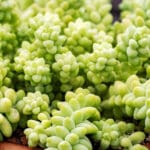
Aloe is a low-maintenance, evergreen succulent with thick, fleshy leaves that are pale grayish-green or green to grey-green. Its gel-filled interior is incredibly soothing, making it a great plant for indoor gardens.
But of all the succulents we have in our gardens and homes, Aloe vera must be the most recognisable and useful. The rosettes of fleshy spiny leaves that send up the occasional spike of bright yellow flowers are as much a decoration for our rooms as they are a medicine and an ancient symbol of good health.
Resource: apps.cals.arizona.edu
Let’s learn more about these little green jewels …
Key Takeaways
- Aloe vera is a low-maintenance succulent with health benefits and decorative qualities.
- You can grow aloe vera indoors for its medicinal gel and calming energy in your space.
- Aloe vera has a rich history and belongs to a diverse family of over 500 succulent species.
- Proper care includes watering deeply but infrequently, providing bright light, and occasionally fertilizing.
- Keep an eye on allergies as the yellow sap can cause irritation; choose your planting location wisely.
Table of contents
- Aloe Vera: The Plant That Was Once Known for Its Aesthetics
- A Brief History of Aloe: Not All Prickly Plants Are Created Equal…
- More Aloes to Consider Adding to Your Collection
- Benefits of Incorporating Aloe into Your Garden
- Signs of Allergies
- Why grow an aloe plant indoors?
- How to purify the air?
- Keeping It Inside
- Aloe Vera Care Tips to Keep Your Plant Thriving
- You asked, we answered:
- So, is aloe vera invasive?
- The Dimensions of Aloe Vera Plants
- To sum up
Estimated reading time: 8 minutes
Disclosure: This article was partially written with the assistance of AI and humanly edited.

Aloe Vera: The Plant That Was Once Known for Its Aesthetics
Aloe vera, the miracle plant, is renowned for its health benefits and uses to treat skin conditions. But it is also believed that having an aloe vera plant indoors can attract positive energy and have a calming effect on your house or office. Today, we will learn about aloe vera plant care.
A Brief History of Aloe: Not All Prickly Plants Are Created Equal…
Aloe vera is a member of the Asphodelaceae family, comprising over 500 species of succulents. Aloes range from the diminutive Aloe brevifolia to the imposing Aloe marlothii, draped in a skirt of thread-like foliage. Aloe vera has densely packed, thick leaves with toothed margins and yellow tubular flowers in spikes that can draw bees and butterflies to your garden.
More Aloes to Consider Adding to Your Collection
- Aloe Barbadensis Miller: This is the most commonly found ‘real’ Aloe vera with medicinal properties.
- Aloe Chinensis: “A slow-growing Aloe with glaucous leaves. This Aloe is not only for its looks but is also a medicinal Aloe.”
- Aloe Arborescens: Not the true Aloe vera, this shrubby aloe is grown for its attractiveness and its usefulness as a garden and indoor plant.
- Aloe Plicatilis: commonly known as fan aloe or fan-aloe, is a species of evergreen succulent flowering plant in the aloe subfamily (Asphodeloideae). It is native to Southern Africa.
Understanding the variations will allow you to select the ideal Aloe vera to suit your gardening preferences and how much attention you can provide.
Benefits of Incorporating Aloe into Your Garden
Conserves water and is eco-friendly
Aloe vera is native to the Arabian Peninsula and Africa and has adapted to live on minimal amounts of water. When you grow Aloe, you are growing a low-maintenance plant that saves water and supports sustainable gardening.
Ornamental and Pharmaceutical applications
One of the most beautiful plants you can include in your garden is the aloe vera. Its symmetrical shape and its use as an “immortal plant” in Egypt make it no surprise that this lovely succulent lends an air of intrigue to your garden. Never mind the gel that can be used to heal wounds, burns, and skin conditions.
Beautiful Pups
Aloe plants produce “pups” around the base of the original plant, so you will eventually end up with several aloes where you once had one. That’s a plus for the planter, but it does mean that you’ll need to either use larger pots or thin them out occasionally, as Aloe produces offsets.
Signs of Allergies
Just one word of caution about Aloe vera gel: although it is anti-dermatitic, the yellow sap which drips from the leaf can cause dermatitis, so if you’re planning on growing it in a playground for kids and pets, you might want to consider this.
If you don’t have an Aloe Vera plant in your home, get one ASAP! They’re not only low maintenance, but they also have a number of health benefits. From the obvious — soothing a nasty sunburn — to the not-so-obvious — helping to alleviate anxiety — having an Aloe plant in your home is one of the simplest ways to improve your life. Not to mention, they’re really pretty to look at. Follow these steps to keep your Aloe happy and thriving, and get ready to reap the rewards!
Why grow an aloe plant indoors?
There is access to Medicinal Gel all year round. Plus, if you have an Aloe on your windowsill, you will always have gel readily available.
How to purify the air?
The aloe, like some other plants on this list, helps clean the air by absorbing formaldehyde and benzene.

Keeping It Inside
Bright Light
Keeping It Inside: Aloe prefers bright light. Because it is a full sun succulent, aloe can be a bit harder to light indoors if low light is provided. Give it as much direct sunlight as you can, and if your home is very low-light, a grow light may be a good option for you.
Watering Problems
One of the biggest errors I see with Aloe vera is the tendency to treat it like an “indestructible” plant. Well, even an Aloe will die if you overwater it! To prevent this, make sure the soil is completely dry before soaking it again when growing Aloe indoors.
Aloe Vera Outside: Nature Knows Best
Aloe loves the sunshine. Aloe in its natural setting gets full to partial sun. This means it’s getting 4-6 hours of direct sunshine per day outdoors. When indoors, give your Aloes a sunny position with bright indirect light, as direct sunshine can cause leaf discoloration in some Aloes. Some Aloes will turn white if the sunlight is too strong. In this case, move it to a filtered light position.
Aloe likes full sun, but can handle partial shade, so this one is somewhat forgiving regarding placement in your garden. If you are taking your Aloe out to the garden from an indoor location, acclimate it to the sunlight slowly.
Timing Is Everything: When to Move Aloe from Pot to Garden
They are fairly hardy, however, and if you bring your Aloe vera plant from a pot indoors and transplant it to the outdoors, where it gets the full sun and full wind, it may go into shock. If you wish to transplant your Aloe into an outdoor garden, do it in the spring so it has time to harden.

Aloe Vera Care Tips to Keep Your Plant Thriving
How often should I water?
Don’t get carried away. Be careful not to overwater, as aloe vera is prone to rot from excess moisture. As is probably obvious from its desert heritage, aloe vera doesn’t need much water. It needs deep, but infrequent watering, and should never be waterlogged.
Fertilize
Aloes do not require much fertilizing, but will appreciate it now and again. In the spring and summer months (when aloes are growing), use a water-soluble fertilizer (20-20-20) that has been diluted to half of what the package calls for. You do not need to fertilize during the fall and winter since the plants are not growing at this time.
Resource: extension.unh.edu
Repotting and Pup Maintenance – Let it Breathe
If your Aloe has outgrown its container or if you have observed that ‘babies’ have developed on the plant, then now is the time for your Aloe to undergo a little surgery! Take the main Aloe and transfer it to a new, bigger pot, and, if there are any ‘babies’, then take each of them and pot them into new pots to make way for all your Aloe plants.

You asked, we answered:
- Yes, Aloe Vera Plants can be indoor as well as outdoor plants.
- Yes, Aloe Vera Plants can be indoor as well as outdoor plants with proper watering and light conditions.
- It usually takes between three and six years for an Aloe Vera grown from seed to mature.
- Seeds of aloe plants are slow to germinate, and may not come true to the parent. That’s why they’re seldom used; pupping is a more productive form of propagation.
- Not all Aloe Vera is the same. Though there are various types of Aloe vera, they generally share the same medicinal benefits, some more potent than others.
So, is aloe vera invasive?
In its native habitat, aloe vera is not an invasive plant. In many other regions, however, it can be invasive and outcompete native species.
Resource: cabidigitallibrary.org
The Dimensions of Aloe Vera Plants
Mature Aloe will spread to 3 feet wide and 2-3 feet tall. To keep it small, keep your Aloe pot-bound.
To sum up
Now you are a part of the succulent squad, not just an Aloe squad! Aloe is the perfect example of beauty with brains, and it has a lot of cool beauty and health hacks. It’s a great succulent addition to any beginner or pro succulent planter. This lovely succulent, Aloe, will add some succulent love, succulent peace, and succulent magic to you and your garden. Happy succulent-ing!